
Pain, stiffness, or limited movement can make even simple daily activities difficult. Whether you’re recovering from an injury, managing a chronic condition, or trying to improve mobility, choosing the right physiotherapy treatment is an important step toward recovery. Two of the most common and effective treatment approaches are manual therapy and exercise therapy.
At Lifeline Physio, our experienced physiotherapists create personalized treatment plans based on your condition, goals, and lifestyle. Understanding the differences between manual therapy and exercise therapy can help you make an informed decision about your care.
What Is Manual Therapy?
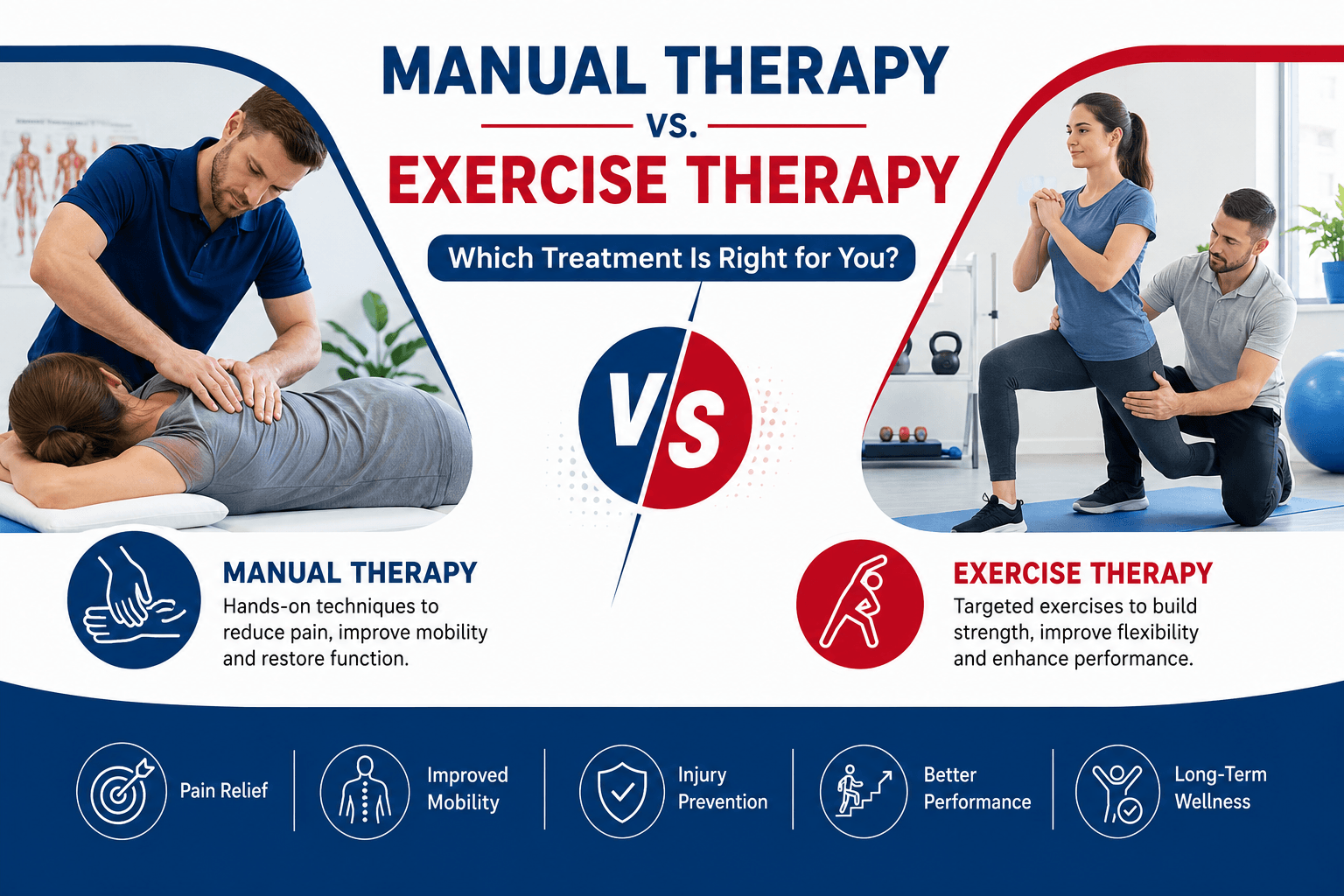
Manual therapy is a hands-on treatment performed by a qualified physiotherapist. It involves skilled techniques that help reduce pain, improve joint mobility, relax tight muscles, and restore normal movement.
Common manual therapy techniques include:
- Joint mobilization
- Soft tissue massage
- Myofascial release
- Trigger point therapy
- Muscle stretching
- Joint manipulation (when appropriate)
Manual therapy is often used to provide immediate pain relief while preparing the body for long-term rehabilitation.
Benefits of Manual Therapy
Manual therapy offers several advantages, including:
- Reduces pain and muscle tension
- Improves joint flexibility
- Restores movement after injury
- Enhances blood circulation
- Speeds up the healing process
- Improves overall mobility
Many patients notice improved comfort after just a few sessions, especially when manual therapy is combined with other physiotherapy treatments.
What Is Exercise Therapy?
Exercise therapy focuses on improving strength, flexibility, endurance, balance, and movement through guided exercises. Unlike manual therapy, which is performed by the therapist, exercise therapy actively involves the patient in the recovery process.
Every exercise program at Lifeline Physio is customized according to the patient’s diagnosis, fitness level, and rehabilitation goals.
Types of Exercise Therapy
Depending on your condition, your physiotherapist may recommend:
- Strengthening exercises
- Stretching routines
- Balance and coordination exercises
- Core stability training
- Posture correction exercises
- Functional movement training
Exercise therapy not only treats the current problem but also helps prevent future injuries.
Manual Therapy vs Exercise Therapy: Key Differences
Although both treatments are highly effective, they serve different purposes.
Manual Therapy
- Passive treatment performed by the physiotherapist
- Provides faster pain relief
- Improves joint and soft tissue mobility
- Ideal during the early stages of recovery
- Helps reduce muscle tightness
Exercise Therapy
- Active treatment performed by the patient
- Builds strength and endurance
- Improves long-term function
- Prevents recurring injuries
- Encourages patient independence
The best results are often achieved by combining both therapies into one personalized rehabilitation plan.
Which Treatment Is Right for You?
The right treatment depends on your symptoms, condition, and recovery goals.
Manual Therapy May Be Best If You Have:
- Acute neck or back pain
- Muscle spasms
- Joint stiffness
- Sports injuries
- Limited range of motion
- Pain after surgery
Exercise Therapy May Be Best If You Need:
- Long-term injury rehabilitation
- Improved strength and flexibility
- Better posture
- Chronic pain management
- Sports performance enhancement
- Injury prevention
During your first visit, the physiotherapists at Lifeline Physio perform a comprehensive assessment to determine which treatment approach will provide the best outcomes.
Why Lifeline Physio Often Combines Both Treatments
Modern physiotherapy rarely relies on just one treatment method. At Lifeline Physio, manual therapy and exercise therapy are frequently used together because they complement each other.
For example, manual therapy may first reduce pain and improve joint movement. Once mobility improves, exercise therapy strengthens the muscles that support the affected area, reducing the risk of future injuries.
This integrated approach helps patients recover faster while achieving long-lasting results.
Conditions Treated with Manual Therapy and Exercise Therapy
Both treatment methods are effective for a wide range of conditions, including:
- Back pain
- Neck pain
- Shoulder injuries
- Knee pain
- Hip pain
- Arthritis
- Sports injuries
- Sciatica
- Tendon injuries
- Post-surgical rehabilitation
- Workplace injuries
- Chronic muscle pain
Each treatment plan is tailored to meet the individual’s specific needs.
Why Choose Lifeline Physio?
At Lifeline Physio, patient-centered care is our priority. Our experienced team uses evidence-based techniques to help patients recover safely and effectively.
When you visit Lifeline Physio, you can expect:
- Comprehensive physiotherapy assessments
- Personalized treatment plans
- Experienced and licensed physiotherapists
- Modern rehabilitation techniques
- Friendly and supportive care
- Focus on long-term recovery and prevention
Our goal is not only to relieve pain but also to restore your confidence and quality of life.
Frequently Asked Questions
Is manual therapy painful?
Most manual therapy techniques are gentle and comfortable. Some patients may experience mild soreness afterward, but this usually disappears within a day or two.
Can manual therapy and exercise therapy be used together?
Yes. In fact, combining both treatments often produces the best recovery outcomes by reducing pain while improving strength and mobility.
How many physiotherapy sessions will I need?
The number of sessions depends on your condition, its severity, and your recovery goals. Your physiotherapist will create a personalized treatment plan after your assessment.
Is exercise therapy suitable for older adults?
Absolutely. Exercise therapy can improve strength, balance, flexibility, and mobility for people of all ages, including seniors.
Do I need a doctor’s referral to visit Lifeline Physio?
Many patients can book an appointment directly without a referral. However, some insurance providers may have specific requirements.
Conclusion
When comparing Manual Therapy vs Exercise Therapy, there is no one-size-fits-all answer. Manual therapy is excellent for relieving pain, improving mobility, and restoring joint function, while exercise therapy builds strength, enhances flexibility, and helps prevent future injuries. In many cases, combining both approaches delivers the best long-term results.
If you’re unsure which treatment is right for you, the experienced team at Lifeline Physio is here to help. Visit us at 2920 Kingsview Blvd SE #3125, Airdrie, AB T4A 0A9, Canada, or call +1 (403) 960-0333 or +1 (403) 960-0331 to schedule your assessment. Let Lifeline Physio create a personalized treatment plan that helps you move better, feel stronger, and live pain-free.