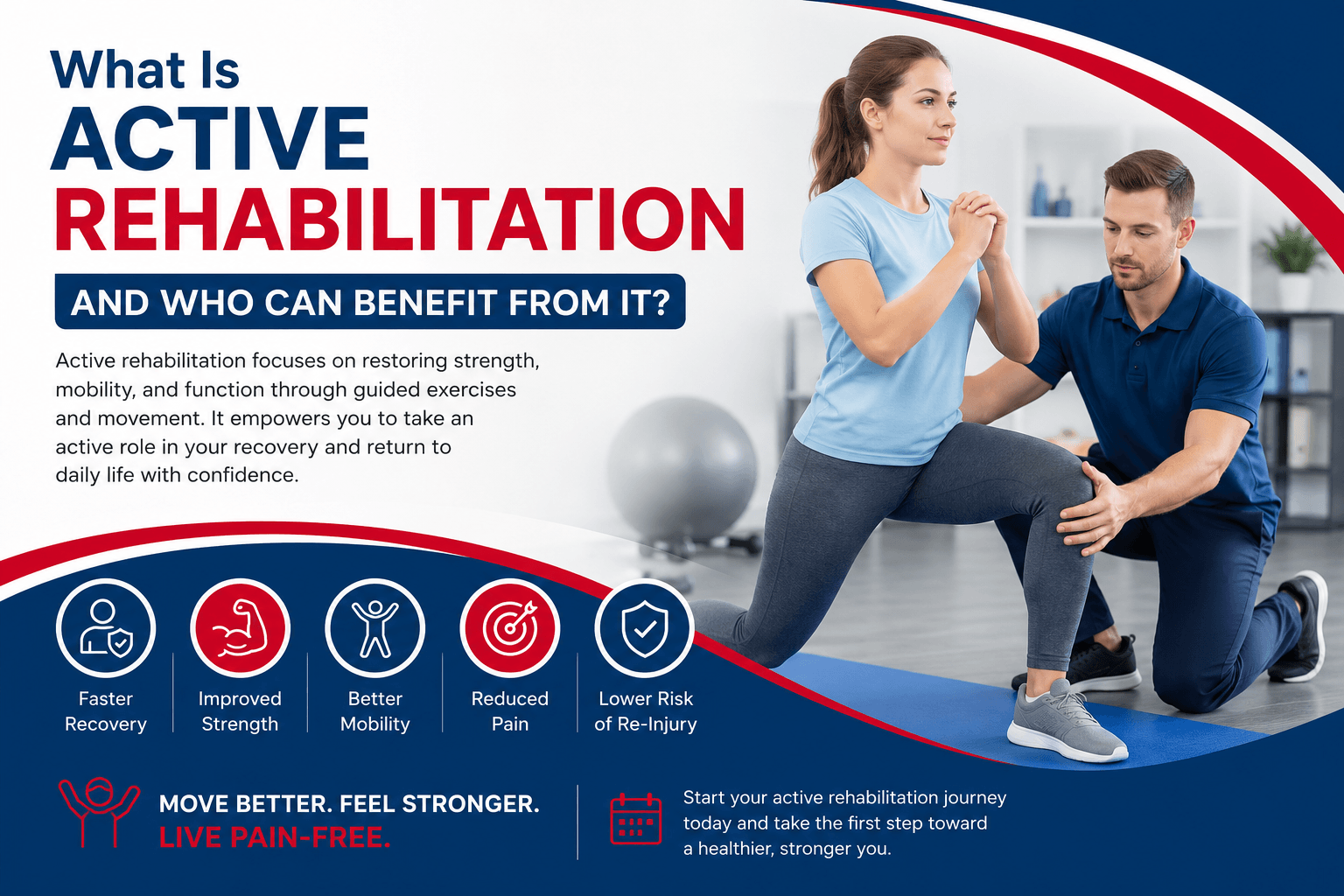
Recovering from an injury or managing long-term pain is about more than simply resting. In many cases, movement is one of the most effective tools for healing. Active rehabilitation focuses on helping individuals regain strength, mobility, flexibility, and confidence through guided exercises and personalized treatment plans. Rather than relying solely on passive treatments, this evidence-based approach empowers patients to play an active role in their recovery.
At Lifeline Physio, we believe that every recovery journey is unique. Therefore, our experienced physiotherapists create customized active rehabilitation programs that help patients return to work, sports, and everyday activities safely and efficiently. Whether you’re recovering from surgery, dealing with chronic pain, or healing after an injury, active rehabilitation can help you achieve lasting results.
What Is Active Rehabilitation?
Active rehabilitation is a physiotherapy-based treatment approach that encourages patients to actively participate in their recovery through structured exercises, movement training, and functional activities. Instead of relying only on treatments like massage or ultrasound, active rehabilitation focuses on improving the body’s natural ability to heal and perform.
These programs are carefully designed based on each patient’s condition, goals, and physical abilities. As recovery progresses, exercises are gradually adjusted to improve strength, endurance, balance, and coordination.
Unlike passive treatments that provide temporary symptom relief, active rehabilitation addresses the root cause of pain and dysfunction, making recovery more sustainable over time.
How Does Active Rehabilitation Work?
Active rehabilitation follows a step-by-step process that ensures safe and effective recovery.
Comprehensive Assessment
First, a physiotherapist evaluates your condition, medical history, pain levels, mobility, strength, posture, and movement patterns. This assessment helps identify the underlying cause of your symptoms.
Personalized Exercise Program
Next, a customized treatment plan is created to match your recovery goals. Exercises are introduced gradually to improve flexibility, muscle strength, stability, and overall function.
Ongoing Progress Monitoring
As your condition improves, your physiotherapist regularly adjusts your program. Consequently, your exercises remain challenging enough to promote continuous progress while minimizing the risk of re-injury.
Who Can Benefit From Active Rehabilitation?
Active rehabilitation is suitable for people of all ages and activity levels. In particular, it benefits individuals recovering from injuries, surgeries, or chronic musculoskeletal conditions.
You may benefit from active rehabilitation if you have:
- Sports injuries
- Back or neck pain
- Shoulder, knee, or hip injuries
- Muscle or ligament strains
- Joint instability
- Arthritis
- Workplace injuries
- Motor vehicle accident injuries
- Post-operative recovery needs
- Balance or mobility challenges
Furthermore, active rehabilitation is valuable for individuals who want to improve physical performance, prevent future injuries, or maintain long-term mobility.
Key Benefits of Active Rehabilitation
Choosing active rehabilitation offers numerous physical and functional advantages.
Faster Recovery
Regular, guided movement promotes blood circulation, supports tissue healing, and helps restore normal movement patterns. As a result, many patients recover more efficiently than with rest alone.
Improved Strength and Mobility
Targeted exercises rebuild muscle strength while increasing flexibility and joint mobility. Consequently, everyday activities become easier and less painful.
Reduced Pain
Strengthening weak muscles and correcting movement patterns often reduces stress on joints and surrounding tissues. Therefore, patients frequently experience long-term pain relief instead of temporary symptom management.
Lower Risk of Re-Injury
Active rehabilitation teaches proper body mechanics, posture, and movement techniques. In addition, strengthening supportive muscles improves overall stability, reducing the likelihood of future injuries.
Greater Independence
As patients become stronger and more confident, they can return to work, sports, and daily activities with improved function and less reliance on ongoing treatment.
Conditions Commonly Treated with Active Rehabilitation
At Lifeline Physio, active rehabilitation is commonly used to manage a wide variety of conditions, including:
- Lower back pain
- Neck pain
- Sciatica
- Rotator cuff injuries
- ACL rehabilitation
- Tennis elbow
- Plantar fasciitis
- Frozen shoulder
- Osteoarthritis
- Post-fracture rehabilitation
- Total knee replacement recovery
- Hip replacement rehabilitation
Because every patient heals differently, treatment plans are always tailored to individual recovery goals.
Why Choose Lifeline Physio for Active Rehabilitation?
Choosing the right physiotherapy clinic plays a significant role in achieving successful outcomes.
At Lifeline Physio, our experienced team combines clinical expertise with patient-centered care to deliver personalized rehabilitation programs. Moreover, we focus on education, injury prevention, and long-term wellness rather than simply treating symptoms.
Our clinic provides:
- Comprehensive physiotherapy assessments
- Individualized active rehabilitation programs
- Evidence-based treatment techniques
- One-on-one physiotherapy sessions
- Ongoing progress evaluations
- Friendly and supportive care
Whether your goal is returning to sports, recovering after surgery, or living pain-free, our team is committed to helping you succeed.
Tips to Get the Most from Active Rehabilitation
Your commitment plays an important role in recovery. To maximize your results:
- Attend every scheduled physiotherapy appointment.
- Complete your home exercise program consistently.
- Communicate openly about your symptoms.
- Follow your physiotherapist’s recommendations carefully.
- Stay patient, as meaningful recovery takes time.
Most importantly, consistency leads to better long-term outcomes.
Frequently Asked Questions
Is active rehabilitation painful?
Some exercises may cause mild discomfort as your body adapts. However, your physiotherapist will ensure the program remains safe and appropriate for your condition.
How long does active rehabilitation take?
Recovery varies depending on the injury, overall health, and treatment goals. While some patients improve within a few weeks, others may require several months of rehabilitation.
Can active rehabilitation prevent future injuries?
Yes. By improving strength, flexibility, balance, and movement patterns, active rehabilitation helps reduce the risk of recurring injuries.
Do I need a referral for physiotherapy?
In many cases, you can book an appointment directly with Lifeline Physio without a physician’s referral. However, some insurance providers may require one.
Is active rehabilitation suitable for older adults?
Absolutely. Active rehabilitation programs are customized for each individual’s abilities, making them effective for seniors who want to improve balance, strength, and independence.
Conclusion
Active rehabilitation is one of the most effective ways to restore movement, reduce pain, and regain confidence after an injury or surgery. By combining personalized exercise programs with expert physiotherapy guidance, patients can achieve long-term improvements in strength, mobility, and overall quality of life.
If you’re ready to recover safely and return to the activities you enjoy, Lifeline Physio is here to help. Visit us at 2920 Kingsview Blvd SE #3125, Airdrie, AB T4A 0A9, or call +1 (403) 960-0333 or +1 (403) 960-0331 to schedule your personalized physiotherapy assessment today.