

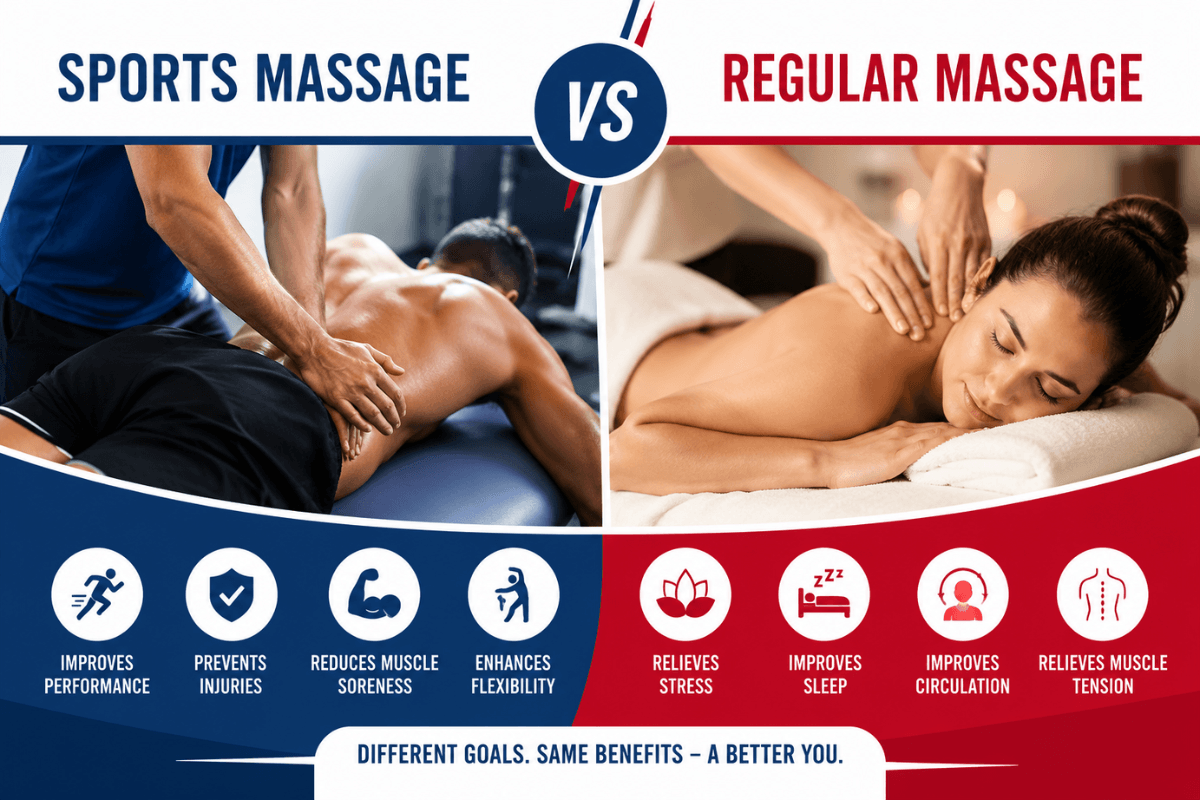
Whether you’re a competitive athlete, a weekend runner, or someone looking to ease everyday muscle tension, choosing the right type of massage can make a significant difference. While both sports massage and regular massage help reduce discomfort and improve overall well-being, they serve different purposes and use different techniques.
At Lifeline Physio, we often help patients understand which massage therapy best supports their health, recovery, and performance goals. In this guide, we’ll explain the key differences between sports massage and regular massage, their benefits, and how to determine which option is right for you.
What Is a Sports Massage?
A sports massage is a specialized form of massage therapy designed to improve athletic performance, prevent injuries, and speed up recovery after physical activity. Unlike a traditional relaxation massage, sports massage focuses on muscles, tendons, and connective tissues that experience repeated stress from exercise or sports.
Depending on your needs, a sports massage may be performed before an event, after exercise, or as part of an ongoing recovery plan.
Common Techniques Used in Sports Massage
A sports massage may include:
- Deep tissue techniques
- Trigger point therapy
- Myofascial release
- Stretching and joint mobilization
- Compression and friction techniques
As a result, these methods help improve flexibility, reduce muscle tightness, and promote faster recovery.
What Is a Regular Massage?
A regular massage, often called a Swedish massage or relaxation massage, is primarily designed to reduce stress, improve circulation, and encourage relaxation. Instead of focusing on sports-related muscle issues, it uses gentle to moderate pressure to ease tension throughout the body.
For many people, regular massage is an excellent way to improve overall wellness and reduce everyday aches caused by work, posture, or stress.
Common Techniques Used in Regular Massage
Regular massage typically includes:
- Long, flowing strokes
- Gentle kneading
- Circular movements
- Light stretching
- Rhythmic tapping
Consequently, the treatment leaves many people feeling calm, refreshed, and less tense.
Sports Massage vs Regular Massage: Key Differences
Although both therapies involve hands-on treatment of muscles and soft tissues, their goals are quite different.
| Feature | Sports Massage | Regular Massage |
|---|---|---|
| Purpose | Performance, injury prevention, recovery | Relaxation and stress relief |
| Pressure | Moderate to deep | Light to moderate |
| Focus Area | Specific muscles affected by activity | Entire body |
| Best For | Athletes and active individuals | General wellness |
| Techniques | Deep tissue, trigger point therapy, stretching | Swedish massage techniques |
| Benefits | Faster recovery, improved mobility, reduced injury risk | Better relaxation, improved circulation, stress reduction |
Therefore, choosing the right massage depends on your health goals rather than simply your comfort preferences.
Benefits of Sports Massage
Sports massage offers several advantages for physically active individuals.
Faster Recovery
After intense workouts or competitions, sports massage helps reduce muscle soreness and supports quicker healing.
Improved Flexibility
Additionally, targeted stretching and soft tissue techniques improve range of motion, allowing muscles to move more efficiently.
Reduced Risk of Injury
Regular sports massage helps identify tight muscles before they become serious problems. As a result, athletes can reduce the likelihood of strains and overuse injuries.
Better Athletic Performance
Healthy muscles perform better. Furthermore, improved circulation and muscle function may contribute to enhanced strength, endurance, and movement efficiency.
Benefits of Regular Massage
Regular massage provides numerous physical and mental health benefits.
Stress Relief
One of the biggest advantages is relaxation. In fact, massage helps reduce stress hormones while promoting a sense of calm.
Better Sleep
Because muscles relax and stress levels decrease, many people experience improved sleep quality.
Improved Circulation
Gentle massage techniques encourage healthy blood flow, helping deliver oxygen and nutrients throughout the body.
Reduced Muscle Tension
Even if you don’t play sports, regular massage can relieve stiffness caused by sitting at a desk, poor posture, or everyday activities.
Which Massage Is Right for You?
The best choice depends on your lifestyle, physical condition, and treatment goals.
A sports massage may be ideal if you:
- Exercise regularly
- Participate in competitive sports
- Are recovering from a sports injury
- Experience recurring muscle tightness
- Want to improve athletic performance
A regular massage may be the better option if you:
- Want to reduce stress
- Need general relaxation
- Experience mild muscle tension
- Want to improve overall wellness
- Spend long hours sitting at work
If you’re unsure, the experienced team at Lifeline Physio can assess your condition and recommend the most effective treatment plan for your individual needs.
How Lifeline Physio Can Help
At Lifeline Physio, we provide personalized massage therapy as part of comprehensive physiotherapy care. Rather than offering one-size-fits-all treatments, our experienced therapists evaluate your movement, pain levels, and recovery goals before creating a customized plan.
Whether you need sports massage to support athletic performance or regular massage to relieve stress and muscle tension, we’re committed to helping you move comfortably and confidently.
Our clinic proudly serves patients in Airdrie with evidence-based care focused on long-term health and recovery.
Frequently Asked Questions
Is sports massage painful?
Sports massage can involve deeper pressure than regular massage, so mild discomfort is possible. However, the treatment should never cause excessive pain, and your therapist will adjust the pressure based on your comfort level.
Can non-athletes get a sports massage?
Yes. Although it’s designed for athletes, anyone with muscle tightness, repetitive strain, or physical job demands can benefit from sports massage.
How often should I get a sports massage?
The ideal frequency depends on your activity level and recovery goals. Generally, active individuals benefit from sessions every two to four weeks.
Is regular massage good for back pain?
Yes. For mild muscle-related back pain, regular massage may help reduce tension and improve comfort. However, persistent pain should be assessed by a physiotherapist.
Should I combine massage therapy with physiotherapy?
Absolutely. In many cases, combining massage therapy with physiotherapy provides better long-term results by addressing both muscle tension and the underlying cause of pain.
Conclusion
Understanding the difference between sports massage vs regular massage helps you choose the treatment that best supports your health and lifestyle. While sports massage focuses on performance, recovery, and injury prevention, regular massage promotes relaxation, stress relief, and overall well-being.
Whether you’re training for your next event or simply looking to feel your best, the experienced team at Lifeline Physio is here to help. Contact Lifeline Physio today to book an appointment and receive personalized physiotherapy and massage therapy tailored to your unique needs.
Lifeline Physio
2920 Kingsview Blvd SE #3125
Airdrie, AB T4A 0A9
Canada